Project summary
This store sells clothing to individual shoppers and also takes bulk orders. Most of its products can be customized, so the catalog is big and many items look almost the same to a search engine. The owner wanted more sales from Google without paying for every click. Our team ran the store’s complete Shopify SEO for more than six months.
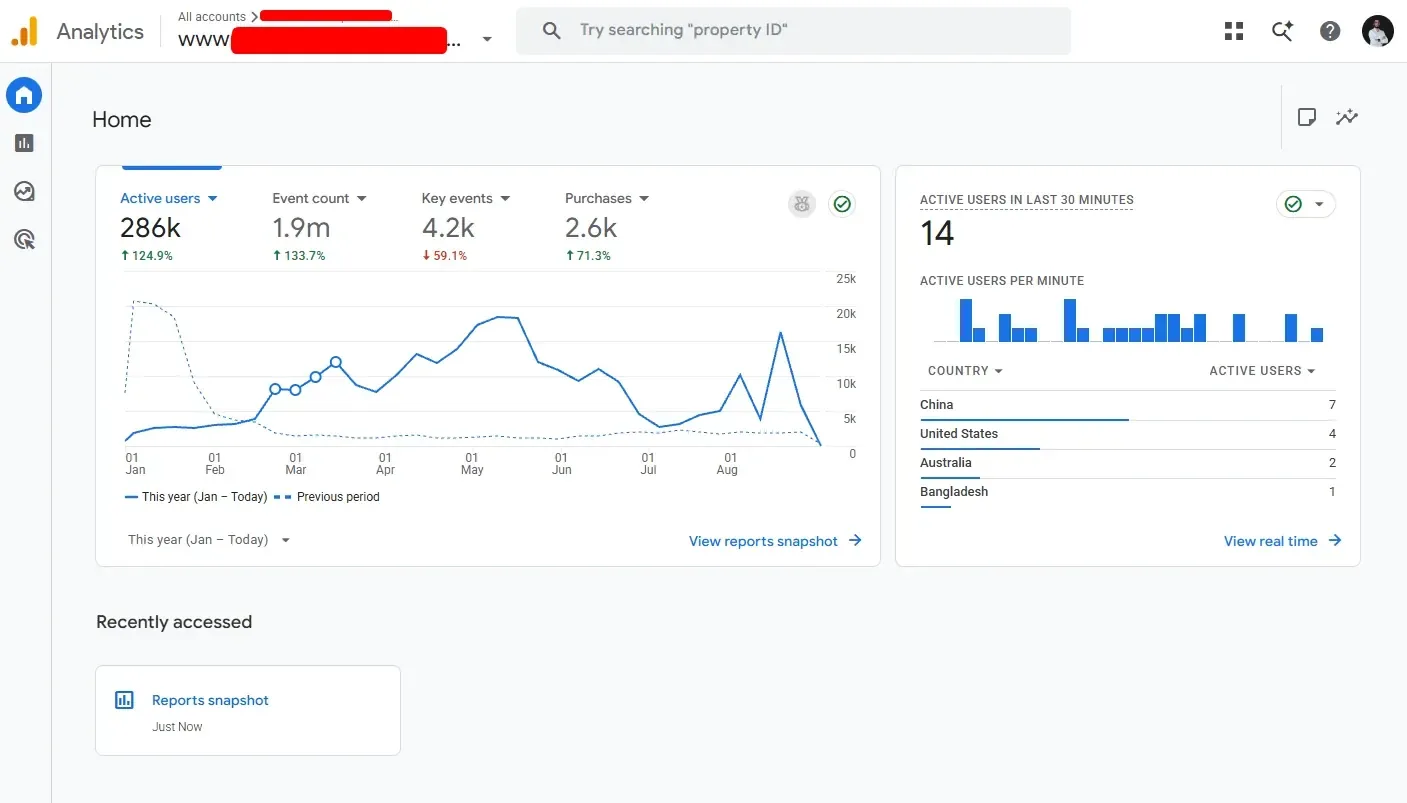
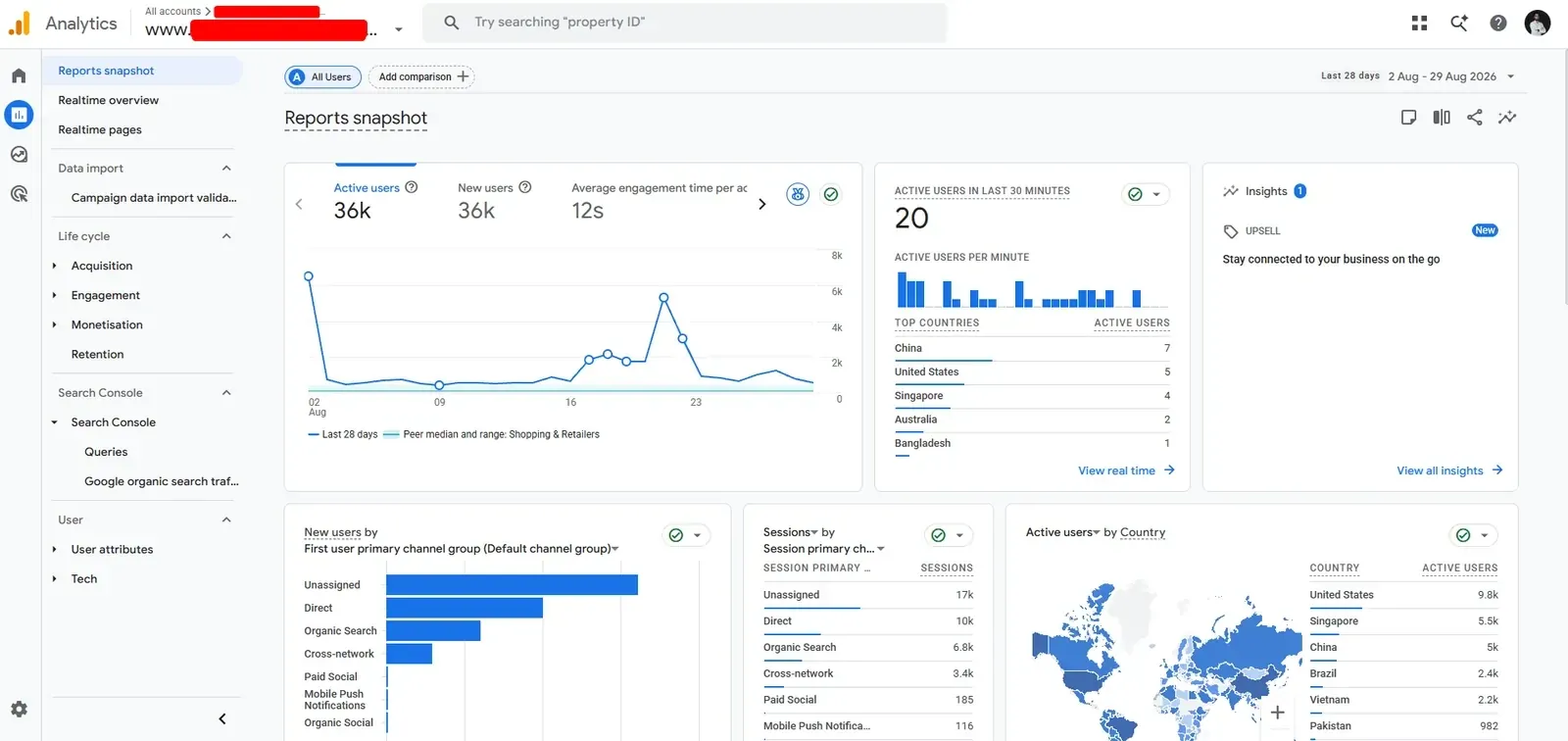
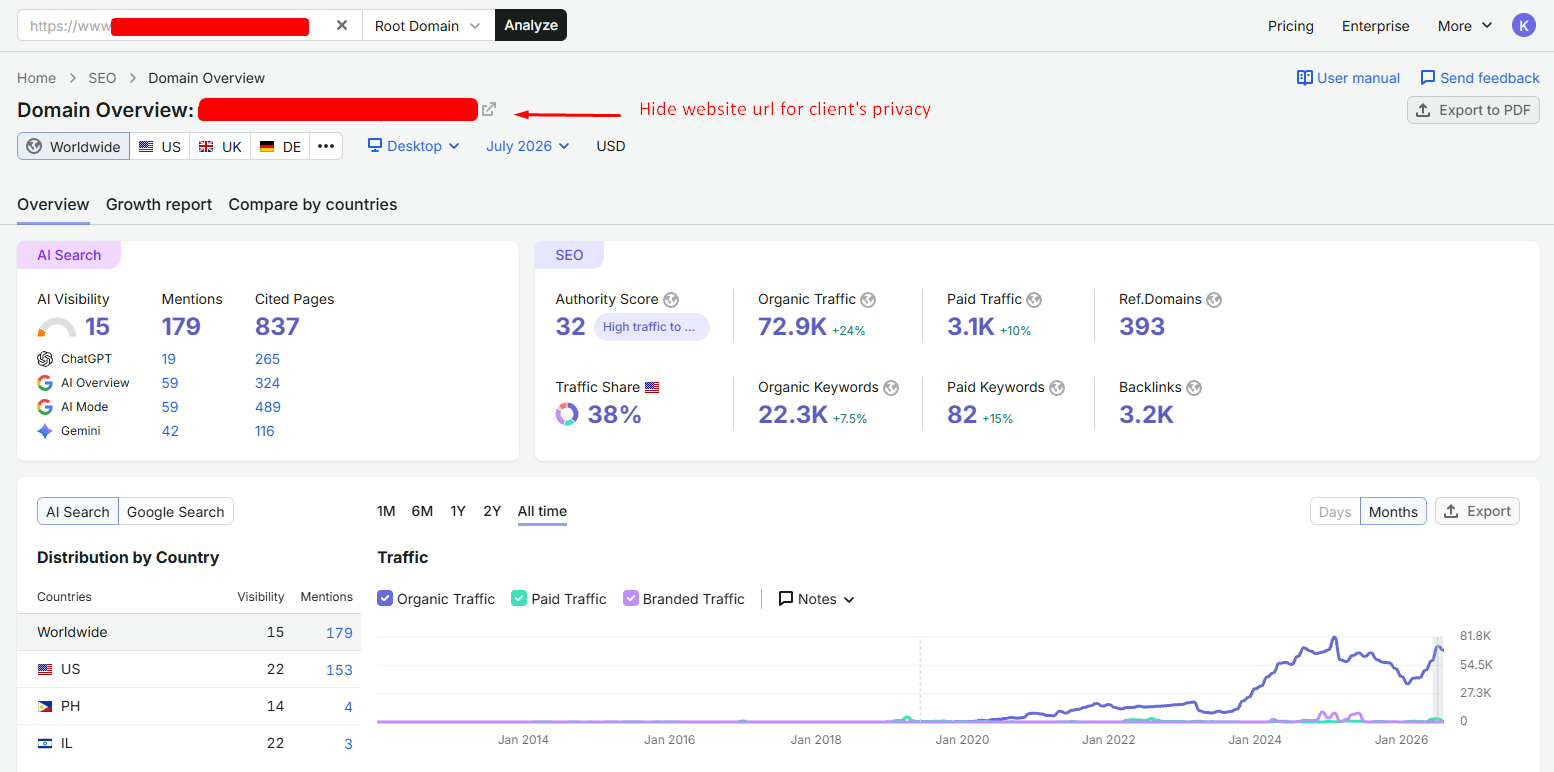
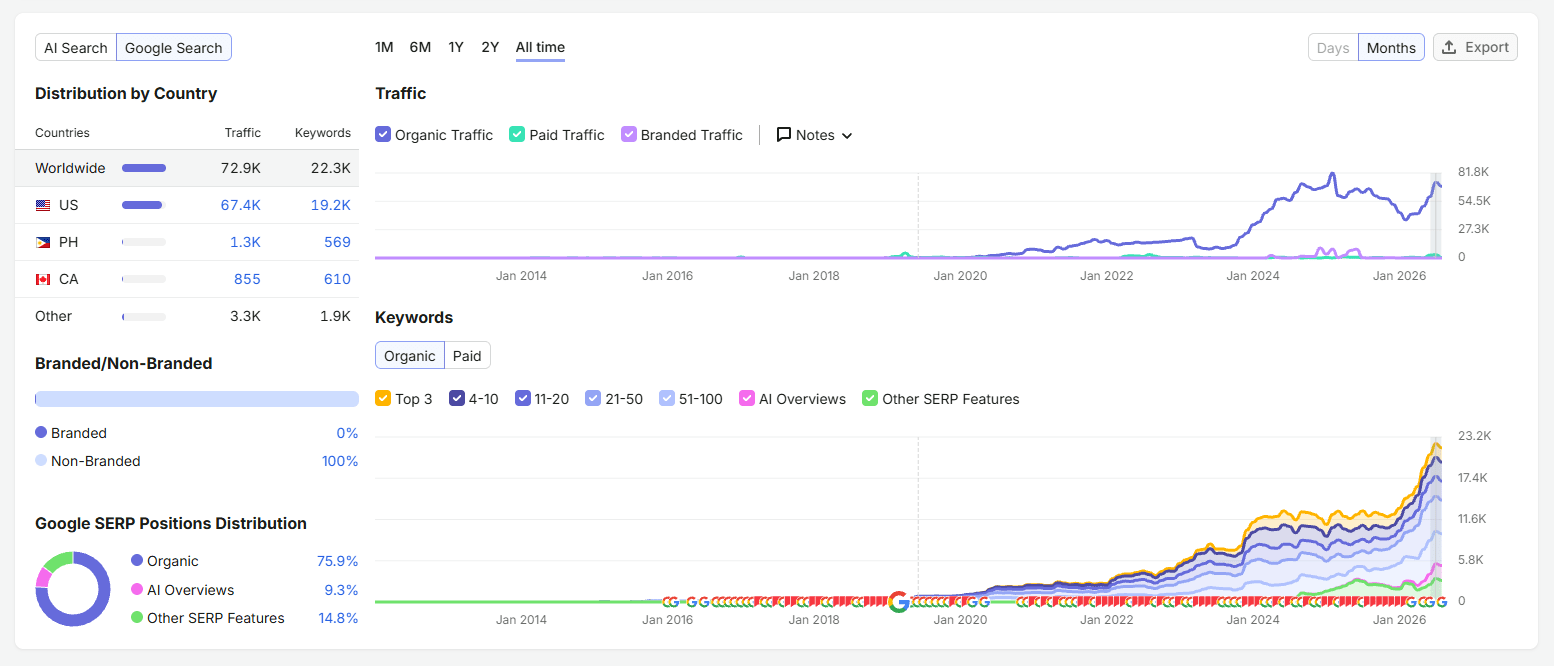
Every figure on this page is taken from the store’s own Google Analytics and Semrush reports. We have hidden the store name and web address in all screenshots, because the client’s privacy comes first.
The problem: hundreds of similar pages competing with each other
A large catalog of near-identical, customizable products is one of the hardest setups in eCommerce SEO. When many collection and product pages target the same idea, Google cannot tell which one deserves to rank, and often it ranks none of them well. We call this keyword cannibalization.
There was a second layer: technical issues were affecting how the store was crawled and indexed. Before any content or link work could pay off, we had to know which pages Google could actually see.
Our strategy
We followed one rule on this project: fix the foundation, then scale. In practice that meant three phases.
- Phase 1, clarity. Audit crawling and indexing, then decide which single page should rank for each group of searches.
- Phase 2, relevance. Rebuild collections and product pages around buyer-intent keywords, and connect them with internal links.
- Phase 3, authority and upkeep. Earn quality backlinks and keep a monthly maintenance and reporting cycle running.
Why we chose this order of work
On a store with many customizable products, it is tempting to start by writing more content or buying links. We chose not to. If several pages already compete for the same search, new content adds one more competitor and links get split between pages that cancel each other out. Deciding which page owns which search costs nothing in content or links, and it makes every later step more effective. That is why clarity came first, relevance second and authority third.
The bulk-order side of the business shaped the plan too. Shoppers buying one item and buyers placing bulk orders search in different ways, so the keyword map had to leave room for both instead of forcing every search onto the same few pages.
Step by step: what our team did
- Full Shopify SEO audit. We checked how pages were discovered, which were indexed, and where the store was sending mixed signals, such as duplicate paths that Shopify creates between collections and products.
- Keyword-to-page map. Every main search group was assigned to one collection or product page, so pages stopped fighting over the same queries.
- Collection restructure. We reorganized collection pages across every product category so each one owns its own set of searches.
- Product page optimization. Product pages were tuned for buyer-intent keywords, the searches people make when they are ready to order.
- Titles and meta descriptions. We rewrote titles and descriptions for the main product and collection pages so each result clearly says what the page offers.
- Internal linking plan. We linked collections, sub-collections and products in a logical way, which helps Google understand which pages matter most and helps shoppers find related items.
- Backlinks. Clothing searches are competitive, so we built high-quality backlinks to strengthen the domain.
- Monthly maintenance. New products and seasonal changes create new issues. Monthly checks caught them early, and tracking showed which changes were working.
What each step involved, and why it mattered
The audit
Shopify creates more than one path to the same product, for example through a collection URL and a direct product URL. Shopify handles canonicals by default, but themes, apps and internal links can still send Google mixed signals. The audit showed which pages Google was crawling and indexing, and where those signals were unclear, so the rest of the work aimed at pages Google could actually see.
The keyword-to-page map
This is the document that ends cannibalization. Each group of similar searches gets one target page. Every other page that touches the topic links to that page instead of competing with it. On a catalog of near-identical products, this map stops the store from working against itself.
Collections and product pages
Collections are where the broad category searches land, so each one was given its own set of searches and copy that explains what is in it. Product pages were tuned to the searches people make when they are ready to buy. Titles and meta descriptions were rewritten so each search result says plainly what the page offers. The meta description does not directly change rankings, but it affects whether people click.
Internal links
Internal links show Google which pages matter most and help shoppers move from a broad collection to the exact item. We linked collections, sub-collections and products in a logical hierarchy rather than at random.
Backlinks and monthly upkeep
Clothing is a crowded space, so the store needed authority from other websites as well as good pages. And because new products and seasonal ranges keep being added, monthly checks caught new duplicates, broken links and indexing issues before they could undo earlier work.
Results
- 72,900 monthly organic visitors from search.
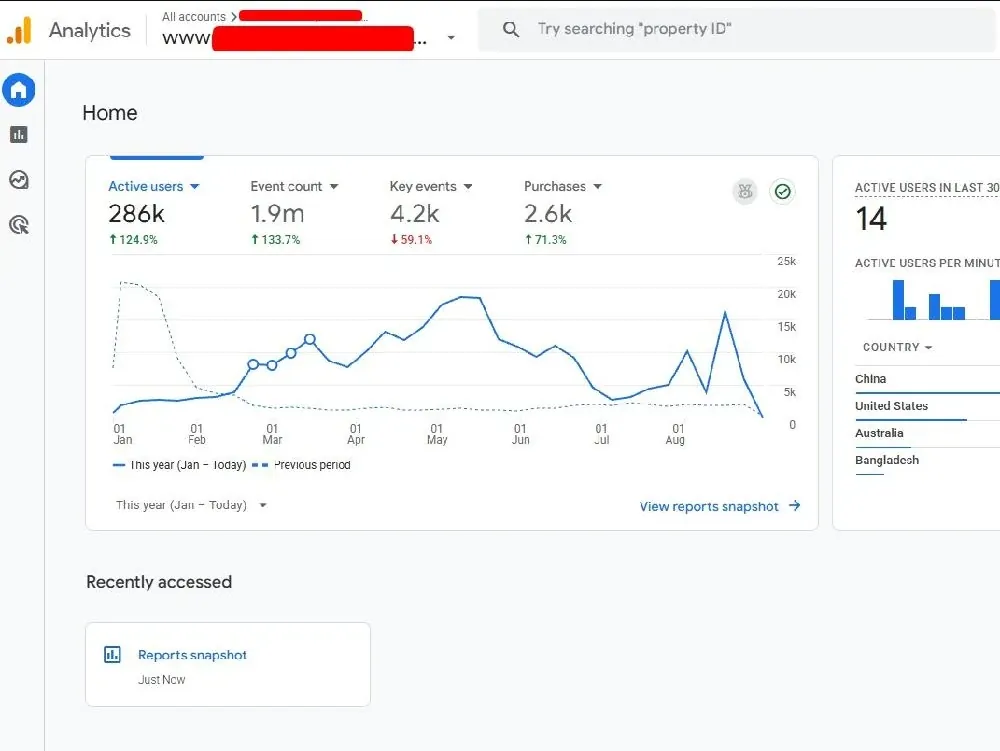
- 286,000 total users recorded in Google Analytics over 8 months.
- Google Analytics also showed active users up 124.9% and purchases (2.6K) up 71.3% against the previous period.
- Steady ranking growth for product and collection pages, and wider visibility for category keywords across the US.
What we would do next
The structure is now in place, so the next gains come from building on it rather than changing it. We would keep the keyword map current as new products and seasonal ranges arrive, so new pages never start competing with existing ones. We would also watch which collections attract impressions without many clicks, because those are usually the quickest wins from better titles and descriptions. And we would keep earning backlinks steadily, focused on the collection pages that carry the store’s most valuable category searches.
What this project taught us
On a big Shopify catalog, structure decides everything. Once every collection and product page had one clear job and the technical issues were fixed, content, links and monthly work started to build on each other instead of competing.
The second lesson is patience. This growth did not come from one big change. It came from consistent monthly work, measured every month, and adjusted when the data said so.
Is this approach right for your store?
If your Shopify store has a large catalog, lots of variants or collections that look alike, the same order of work usually applies: audit, map, restructure, then build authority. See how we handle this on our Shopify SEO services page, or read more about our eCommerce SEO agency work.
Evidence from the project
Screenshots from the client's own tools. Click to enlarge.