Project summary
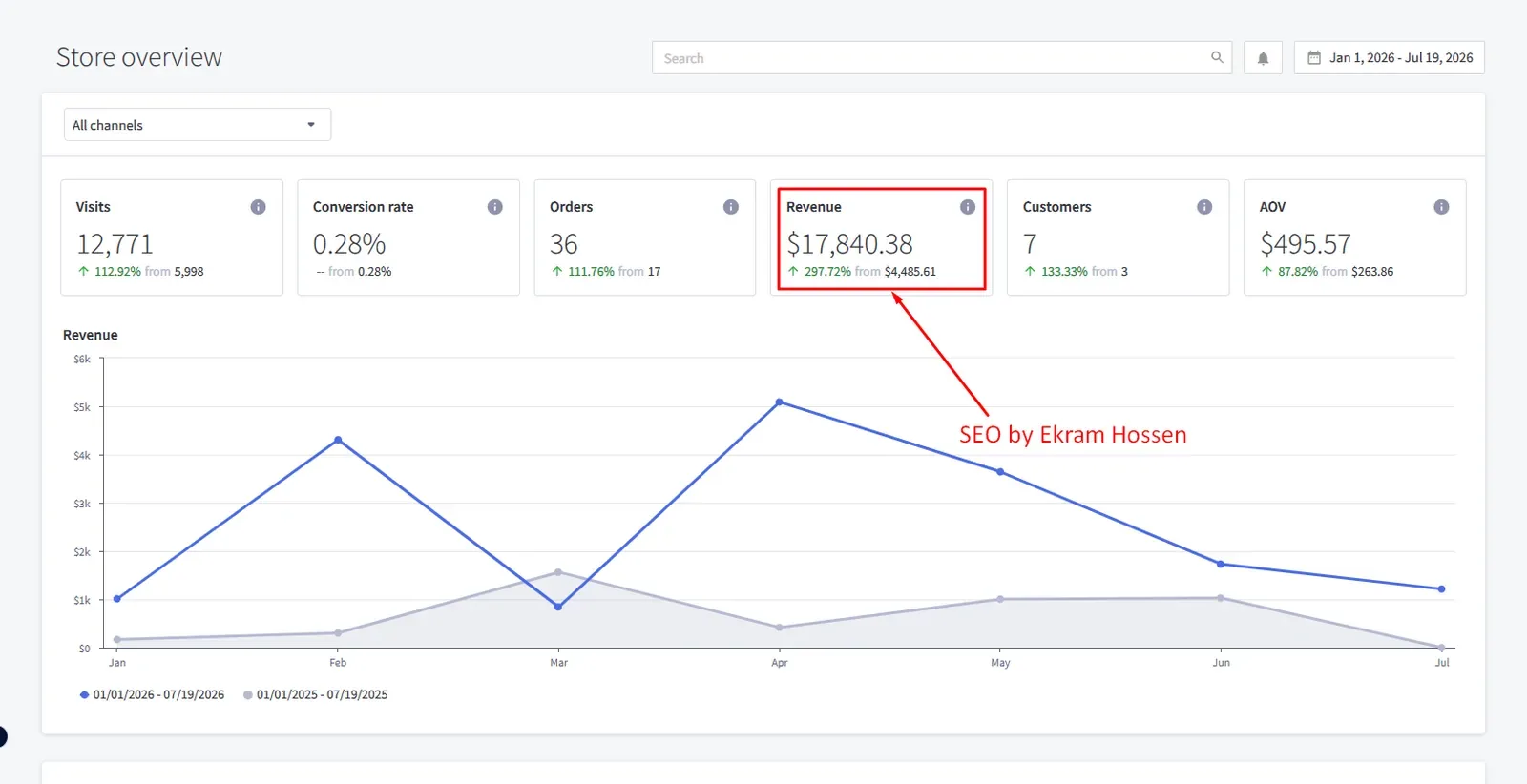
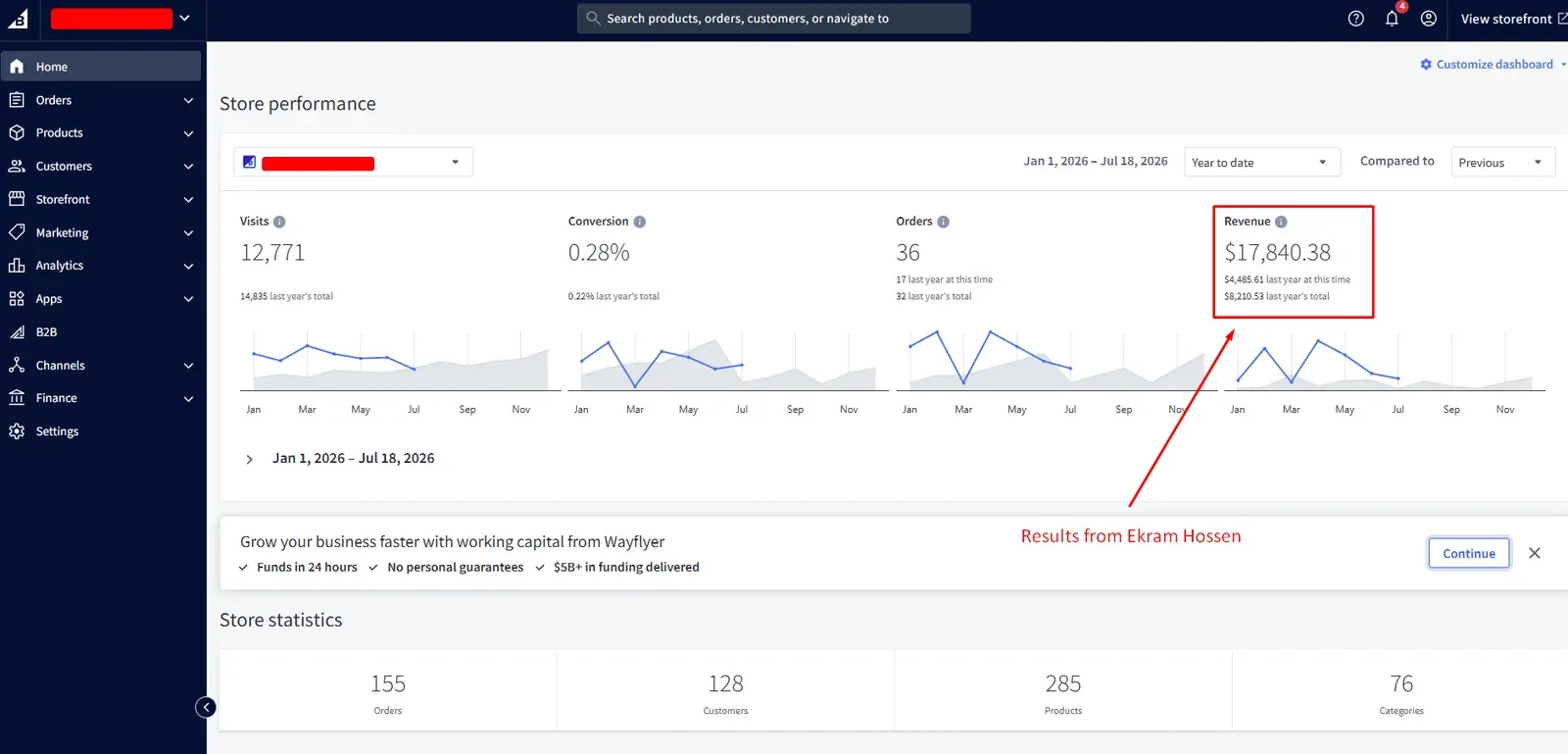
The shop supplies custom air ride kits, air bags and springs, lowering kits and tow-assist helper kits that fit Ford, Chevrolet, GMC, Dodge, Toyota, Nissan and Jeep models. Our team managed its ongoing BigCommerce SEO. Organic search produced $17,840.38 in revenue for the store within 6 months.
All figures are pulled from the client’s BigCommerce analytics and Search Console account. We keep the store’s name private at the client’s request.
The problem: a fitment-driven niche
Nobody searches for “suspension parts” in general. Shoppers look for an exact part for an exact vehicle and need confidence it fits before paying. A vague page that might describe any truck neither ranks for such narrow queries nor reassures the person buying.
So every product and category page needed to match the part type and the vehicle make closely, both to rank and to sell.
Our strategy
In a parts niche, buyers know what they want. Revenue grows quickest when the very pages selling those parts are the ones Google puts first. Product and category pages took most of our on-page time, and the links we built pointed at those same pages.
Average order values are high in this niche, so we tracked orders and revenue, not just traffic. A small number of extra orders makes a real difference.
Why we chose this approach
Air ride and suspension parts are high-value, specific purchases. A buyer usually knows the vehicle and the type of part they need, and searches for exactly that. Whoever pairs the part with the vehicle most clearly takes the click. That is why we spent most of our effort on product and category pages, rather than chasing broad, high-volume searches that bring browsers but few buyers.
The order value in this niche also meant a small number of extra orders could change revenue a lot. Our goal was not huge traffic. It was the right visitors reaching the right pages.
Step by step: what our team did
- BigCommerce SEO audit. A full audit showed what was holding the store back.
- Product page optimization. We matched each product page to the part type and vehicle makes people search for.
- Category page targeting. Every category received a dedicated keyword, giving each category query a single obvious landing page.
- SEO content. Page copy was rewritten so people and crawlers alike understand exactly what each product is.
- Backlinks. We built backlinks to grow the store’s authority.
- Monthly maintenance and tracking. Regular checks kept the store healthy as products changed.
What each step involved, and why it mattered
Audit and technical fixes
Before optimizing pages we checked that Google could crawl and index the BigCommerce store properly. Any page Google cannot see properly can’t rank, however well it is written.
Product and category targeting
Each category was given its own keyword target so category searches had one clear page to rank, and products were aligned with the specific part searches buyers use. This also stops categories and products from competing for the same terms.
SEO content
On-page copy was improved so pages explain the products clearly. For technical parts, clear information helps buyers confirm they have the right item and helps Google understand the page.
Backlinks and maintenance
Backlinks grew the store’s authority against other parts retailers. Monthly maintenance kept the store healthy as products changed, so earlier gains weren’t lost to new technical issues.
Results
-
$17,840.38 organic revenue in 6 months.
- Consistent growth in product and category rankings.
BigCommerce overview, 1 Jan – 19 Jul 2026 against the same dates a year before: revenue $17,840.38 (+297.72%, previously $4,485.61), visits 12,771 (+112.92%, previously 5,998) and orders 36 (+111.76%, previously 17), placed by 7 customers at an average order value of $495.57.
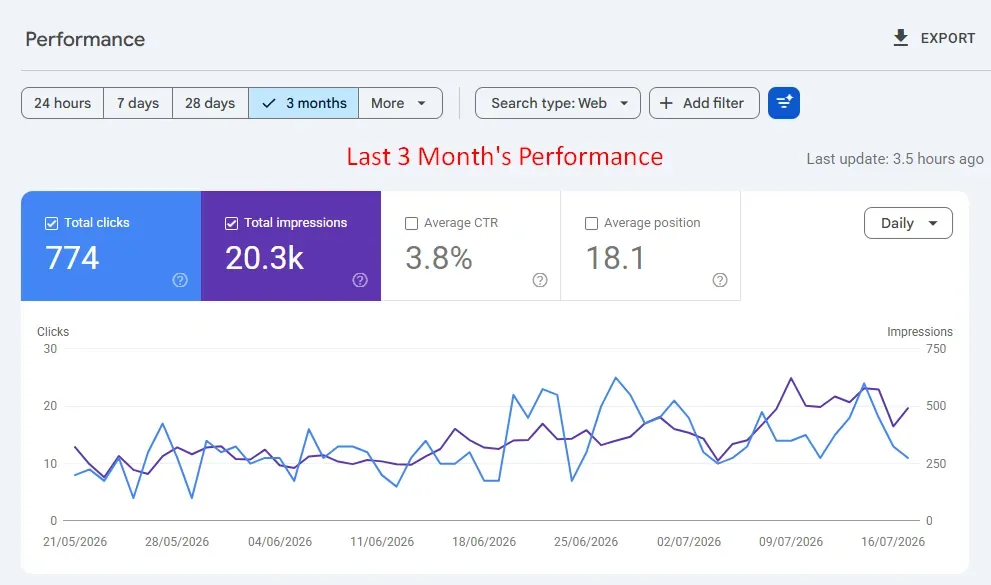
Over the latest 3 months Search Console shows 774 clicks from 20.3K impressions, CTR 3.8%, average position 18.1.
What we would do next
Search Console shows an average position of 18.1 for the last three months, which means many searches sit on page two. The next step would be to find the category and product pages just below page one and strengthen them with better content, internal links and backlinks, since moving them onto page one is the most direct route to more orders.
What this project taught us
Clear part-and-vehicle pages, backed by consistent links and monthly maintenance, are what convert searches into sales. When each order is worth hundreds of dollars, modest traffic can still lift revenue sharply. You need the right visitors on the right pages.
Is this approach right for your store?
If you run a parts or fitment-based store, start with your product and category pages. Read more about our eCommerce SEO agency work or our general SEO services.
Evidence from the project
Screenshots from the client's own tools. Click to enlarge.