Project summary
A mental healthcare company launched a new website and asked our team to help it get found in search. The young site ended up with 48% more traffic.
Mental health is a YMYL (“Your Money or Your Life”) topic, where Google expects a very high standard. Our remit was purely search optimisation; no clinical or medical material was written or edited by us, and no health outcomes are claimed here. The company stays private.
The problem: a new site in a field built on trust
A new website has no search history, rankings or authority. Trust carries extra weight in mental health, since people looking for support need information that is dependable, plain and safe. That gave the project two strands: the groundwork any new domain requires, plus close attention to trust signals, structure and usability.
The situation in more detail
The company was launching a brand-new website. That meant no rankings, no backlinks and no history with Google. On top of that, mental health content is judged by a high standard: people searching may be in a difficult moment, and they need pages that are clear, trustworthy and easy to use on any device.
Our strategy
For YMYL sites, secure HTTPS, quick loading and a phone-friendly layout feed directly into how users and Google assess credibility. We put those first, then structure and links, then local visibility, because many people look for support close to where they live, often on a phone or by voice.
Why we chose this approach
Mental health is YMYL, so trust signals came first: a secure site (HTTPS), fast loading and a design that works well on phones. Visitors notice these, and search engines use similar signals. After that came structure and links, and then local visibility, because many people look for support near where they live, often on a phone or by voice.
We were also clear about our limits. We improved structure and readability but did not change the clinical substance of the content. That belongs to the company’s professionals.
Step by step: what our team did
- Keyword research and competitor analysis of the searches people use and the sites ranking for them.
- Meta tags and header tags: clear titles, descriptions and a logical heading structure.
- Image optimization for speed and useful alt text.
- Mobile-friendly design and site speed.
- Internal and external linking to connect related pages and cite relevant sources.
- Backlink building for the new domain.
- Local SEO so nearby people can find the company.
- Schema markup and HTTPS.
- Analytics tracking so progress can be measured.
- Regular audits and voice search optimization, adjusting as search changed.
Clearer content: improved layout and readability while leaving the clinical meaning, owned by the company’s practitioners, untouched.
Better usability, plus links to the brand’s social channels.
What each step involved, and why it mattered
Research and on-page basics
Keyword research and competitor analysis showed how people search and who ranks. Clear titles, descriptions and a logical heading structure help visitors find what they need quickly, which matters on a sensitive topic.
Speed, mobile and images
Images were optimized for speed and given useful alt text. Mobile-friendly design and fast pages matter because many people search for support on their phones.
Links, local SEO and schema
Internal links connect related pages, and external links point to relevant sources. Local SEO helps nearby people find the company. Schema markup helps search engines understand the organization and its pages.
Measurement and upkeep
Analytics tracking showed what was working. Regular audits and voice search optimization kept the site in line as search changed.
Results
-
Traffic up 48% for the newly launched site.
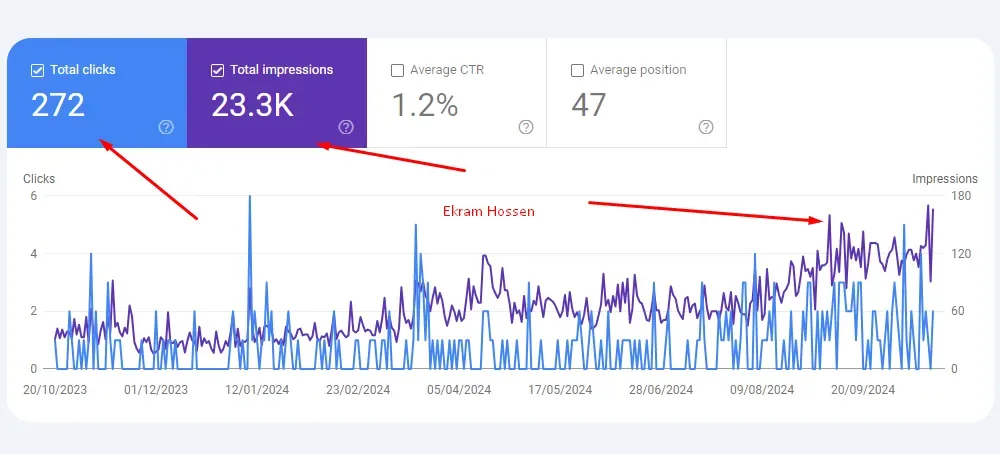
- Google Search Console, 20 Oct 2023 to about Oct 2024: 272 clicks and 23.3K impressions, 1.2% average CTR, average position 47.
- Daily impressions rise from around 30 at the start to around 150 or more by September and October 2024.
Sitting at an average position of 47 is normal for a domain that is still earning credibility. Climbing impressions mean Google is surfacing the site for a widening set of queries.
What we would do next
An average position of 47 is normal for a new site still earning trust. We would keep building authority with relevant backlinks, strengthen local visibility and keep improving the structure of the pages with the most impressions, while the company’s professionals continue to own the clinical content.
What this project taught us
In a sensitive niche, a new site grows through lots of small tasks done reliably: clear pages, speed and security, thoughtful links, local presence and regular audits. Our boundary stays firm: we work on how the site is discovered and read, while clinical material remains with the qualified professionals.
Questions healthcare providers often ask
Do you write medical content?
No. We improve how pages are structured, found and understood. The clinical content stays with the qualified professionals responsible for it.
Why does local SEO matter for mental health services?
Many people look for support close to home. Local SEO helps a provider appear when people nearby search, including on maps and by voice.
Work in healthcare?
See our SEO services and local SEO services.
Evidence from the project
Screenshots from the client's own tools. Click to enlarge.