Project summary
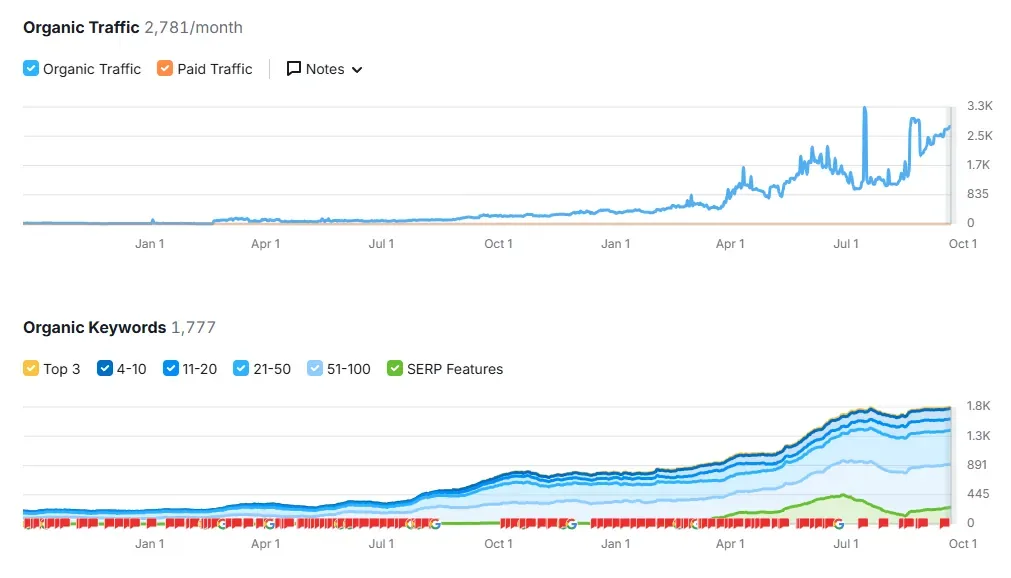
This online store is built on WordPress and WooCommerce. During the engagement organic growth reached 122%, taking the shop from a trickle of search visits to several thousand a month.
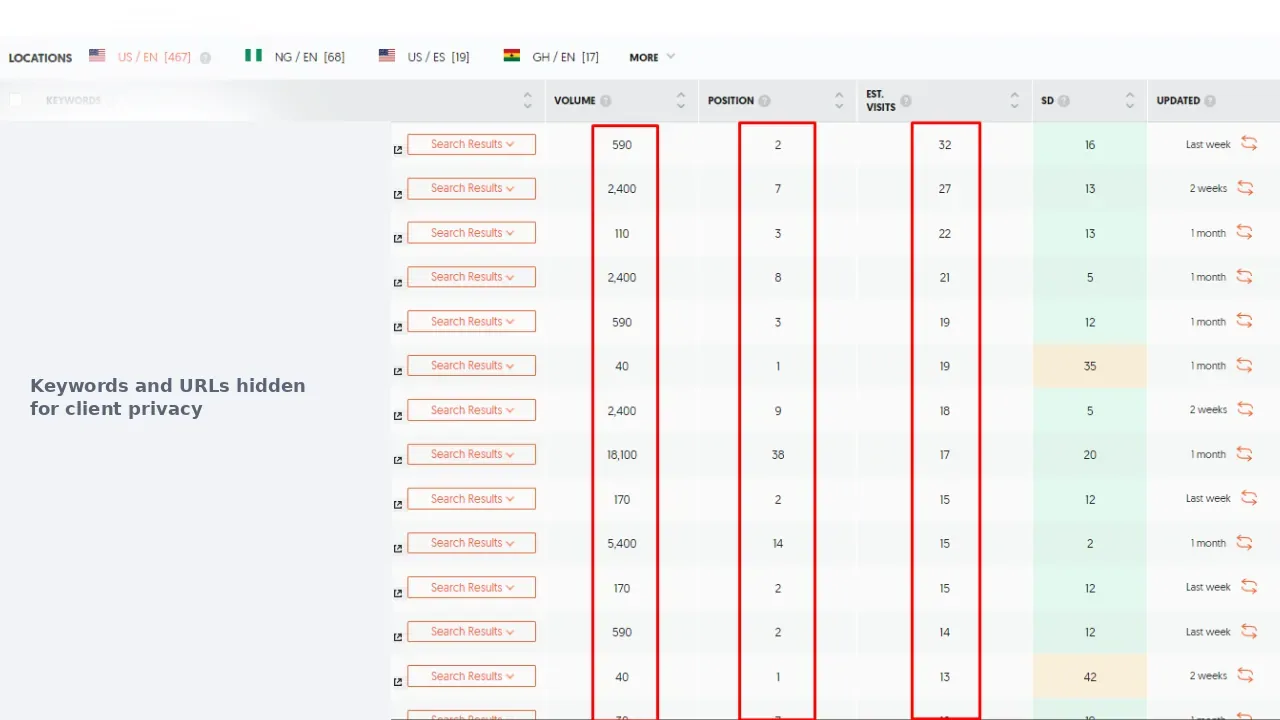
Data comes from Google Search Console, Semrush and our own keyword research report for the store. Product URLs are covered in the keyword screenshot, and the store stays private.
The starting point
Semrush shows organic traffic starting close to zero. Demand for its products existed, yet the shop was missing from the buyer-intent results, leaving it to pay for each visit or go without. The aim was to turn organic search into a real sales channel.
The situation in more detail
The store already had products people search for. What it lacked was rankings for the searches that bring buyers. Without those, every visitor had to come from paid channels or not at all. We set out to turn organic search into a dependable sales channel, and our research surfaced fast wins alongside longer-range goals.
Our strategy: win the specific searches first
WordPress shops often end up chasing queries that never convert. High-volume terms can be out of reach for a small retailer, while lower-volume phrases frequently bring people ready to purchase. The research report captures both groups: terms with roughly 40–590 searches a month where the shop holds positions 1–3, and larger terms at 2,400, 5,400 and 18,100 monthly searches that it is still working up. Winning the specific searches first brings real visitors quickly and builds the authority needed for the bigger ones.
Why we chose to win specific searches first
The keyword research showed two kinds of opportunity. Narrow queries of about 40–590 monthly searches could be won quickly and attracted shoppers with a clear purchase in mind. The 2,400, 5,400 and 18,100-volume terms carried more value but far more competition. We started with the specific searches because they bring real visitors and sales sooner, and the authority they build helps the store climb on the bigger ones later.
Step by step: what our team did
- Website audit of the store.
- Keyword research and mapping, tracking 467 keywords in the US.
- Competitor analysis of stores already ranking.
- On-page SEO on product and category pages.
- Backlinks and off-page SEO to grow authority.
Technical fixes that let search engines crawl and index the shop without obstacles.
Ready for AI search: copy structured so AI assistants can read and reuse it.
What each step involved, and why it mattered
Audit and keyword mapping
The audit showed the store’s starting point. We tracked 467 keywords in the US and mapped them to product and category pages, so each page had a clear target and pages did not compete with each other.
Competitor analysis
Looking at stores already ranking showed how they structured their pages and which searches they owned, which helped us pick where to aim.
On-page and technical SEO
Product and category pages were optimized for their target searches, and technical work made sure Google could crawl and index the store without problems.
Backlinks
Backlinks grew the store’s authority, which matters most for the bigger keywords it is still climbing on.
AI search readiness
Copy was made plain and well structured for AI tools, preparing the shop for buyers who now search through assistants.
Results
- 122% increase in organic growth.
- Keyword report: 467 tracked US keywords, with several in positions 1 to 3.
Semrush estimates organic traffic rose from almost nothing to 2,781 monthly visits (high point near 3.3K), with 1,777 keywords ranking.
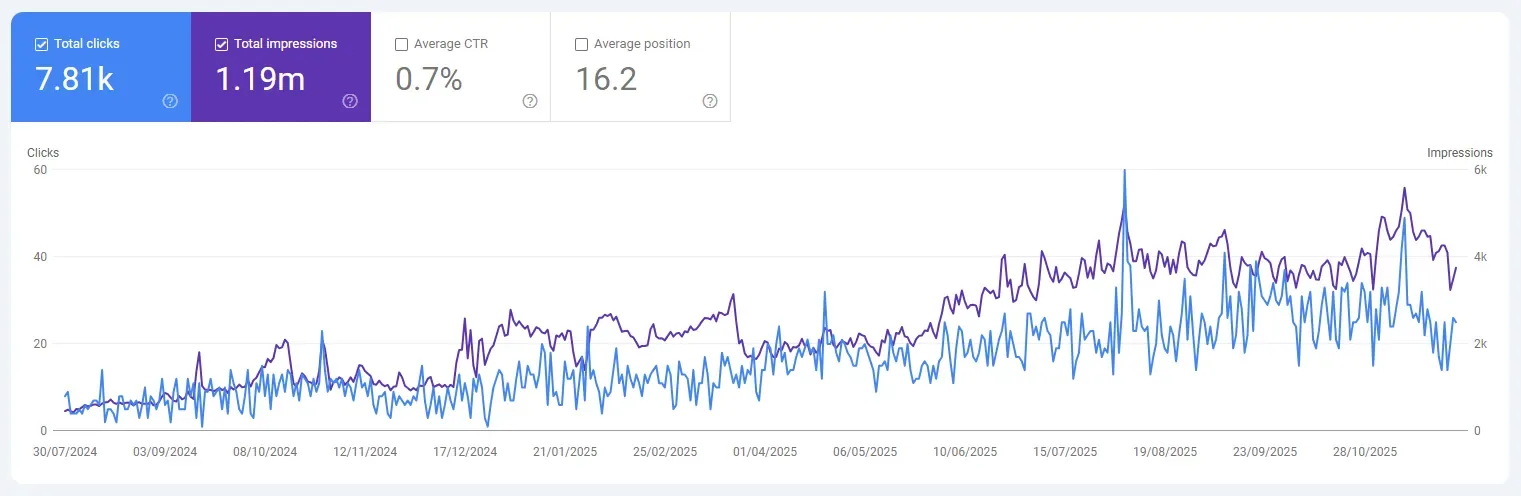
Search Console, 30 Jul 2024 – around Nov 2025: 7.81K clicks from 1.19M impressions, CTR 0.7%, average position 16.2. Both clicks and impressions rise over the whole range.
What we would do next
An average position of 16.2 means many keywords sit just below page one. We would focus on those pages first, then keep pushing the larger keywords the store is still climbing on, with more authority and stronger category content.
What this project taught us
Ecommerce growth rarely comes from one change. The Search Console chart shows a slow start, then repeated step-ups as more pages ranked. Average position 16.2 points to the next opportunity: plenty of terms are sitting just short of page one.
Questions store owners often ask
Why not go after the biggest keywords straight away?
Big keywords are usually dominated by stores with much more authority. Winning specific searches first brings real buyers sooner and builds the authority needed for the bigger terms. On this store, several specific keywords already sit in positions 1 to 3.
What does “AI search readiness” mean in practice?
Clear headings, direct answers and well-structured product information that AI tools can read and summarize accurately. The same clarity also helps shoppers.
Want the same for your store?
See our WordPress and WooCommerce SEO service or our eCommerce SEO agency page.
Evidence from the project
Screenshots from the client's own tools. Click to enlarge.