Project summary
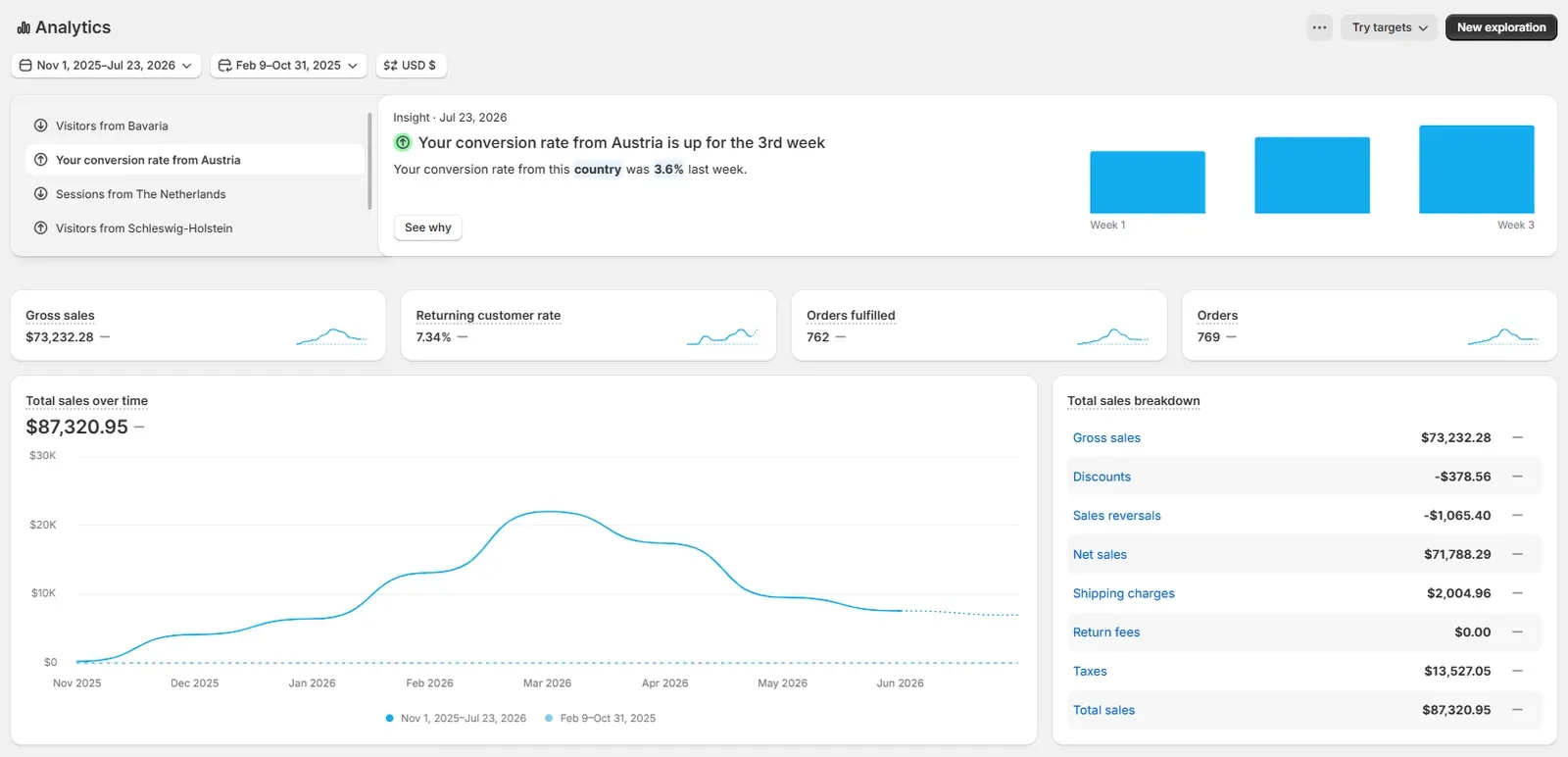
The client is a premium skincare and makeup retailer based in Germany. Its range covers professional lines including Environ, Jane Iredale, IMAGE Skincare and Advanced Nutrition Programme, shipped to customers in Germany and elsewhere in the EU. Our team managed the store’s ongoing Shopify SEO. Across 9 months, organic search brought the shop $87,320.95 in revenue.
The figures below come straight from the store’s Shopify analytics and Google Search Console, shown exactly as those tools report them. The store’s name and website stay private.
The problem: same brands, many competitors, several languages
Premium skincare is crowded. Many retailers sell the same brands, so the store’s product and collection pages compete with large shops for identical brand and product searches. A shopper typing the name of an Environ or Jane Iredale product gets one retailer at the top, and Google decides which one.
The store also serves more than one country and language. Each language edition needed to be easy for Google to read without cannibalising the others, so a multilingual layer sat on top of the standard on-page and technical tasks.
Our strategy
When you sell what everyone else sells, the product alone does not win. We used competitor research to find searches the store could realistically win, then put most of our effort into collection and product pages for those searches, supported by a clean technical setup and steady link building.
Why we chose this approach
Premium skincare buyers compare products carefully before they spend. That shaped two decisions. First, product and collection pages had to explain products clearly enough to help that comparison, not just carry keywords. Second, the store needed trust and authority, because shoppers and Google both judge a premium store on how credible it looks.
We also kept the work steady rather than front-loaded. Revenue from SEO builds as pages move up over months, so a consistent monthly cycle of fixes, optimization and links suited the store better than one large push followed by nothing.
Step by step: what our team did
- Technical SEO audit. We found and fixed the issues holding back crawling and indexing on the Shopify store.
- Competitor analysis. Our team looked at rival skincare shops to learn which pages and queries earned them traffic, and where this store could realistically compete.
- Collection pages. Each collection got its own keyword target, so every category search had one clear page to rank.
- Product pages. We optimized product pages for the brands and items the store sells, matching the way shoppers actually search.
- Multilingual SEO. Every task was planned with the shop’s languages and target countries in mind.
- Backlinks. We built backlinks to grow the store’s authority.
- Monthly maintenance. Ongoing monthly maintenance and tracking kept the gains in place.
What each step involved, and why it mattered
Technical health
A premium store can’t afford slow or broken pages. Problems found in audits were fixed first, so shoppers and Google both had a smooth path through the store.
Keyword targeting by page
Shoppers search for brands, product types and skin concerns. Mapping those searches to the right collection or product page meant each page had a clear purpose, and the store stopped relying on one or two pages to catch everything.
Product and collection content
Clear product information helps careful buyers decide and helps Google understand what each page sells. We improved on-page copy, titles and descriptions so each page said plainly what it offers and who it is for.
Authority
Backlinks from relevant sites help a store compete with larger retailers selling the same brands. We built them steadily alongside the on-page work.
Monthly tracking
Monthly reporting showed which changes were turning into revenue and which pages needed more attention next.
Results
-
$87,320.95 in organic revenue in 9 months.
- Consistent growth in product and category rankings.
Shopify’s sales report (1 Nov 2025 – 23 Jul 2026): $87,320.95 total sales, gross $73,232.28, net $71,788.29, 769 orders with 762 fulfilled, and returning customers at 7.34%.
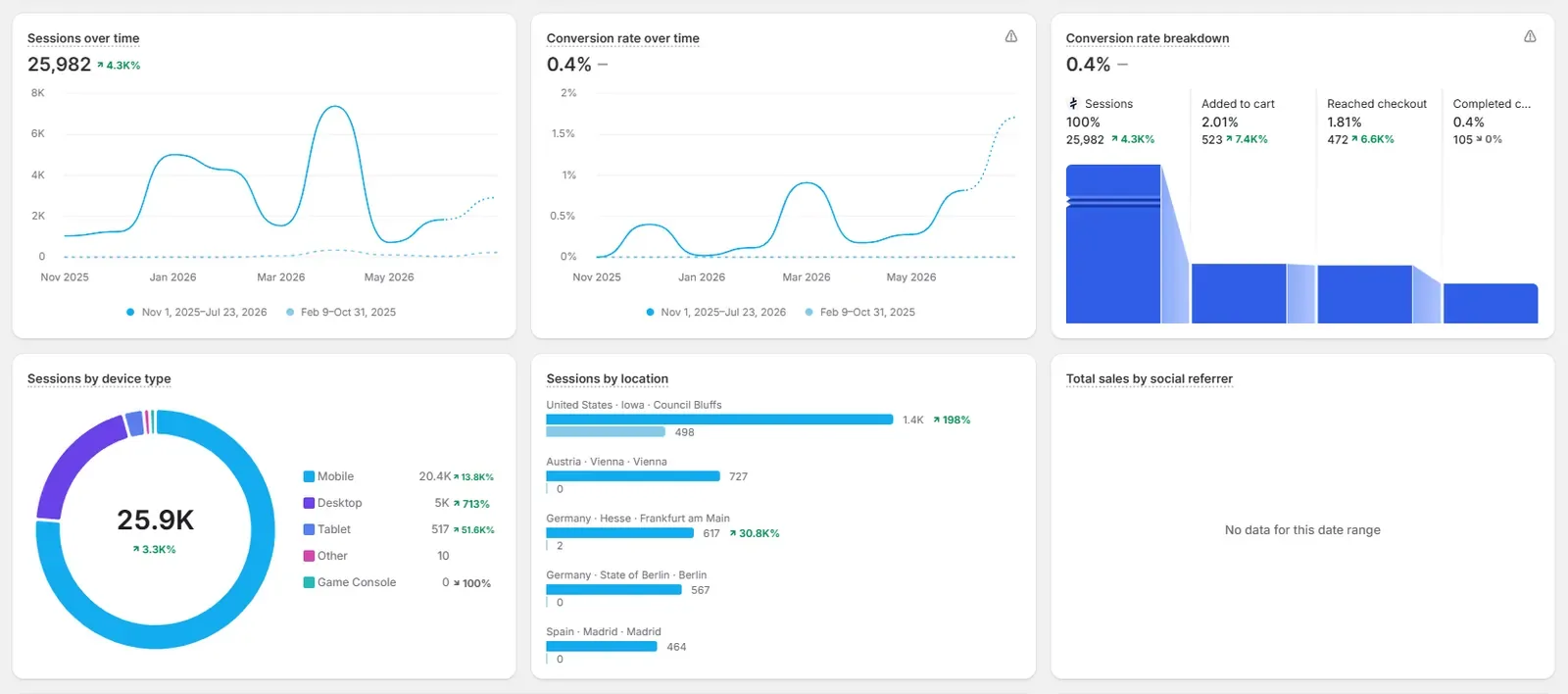
In that window, Shopify analytics counted 25,982 sessions; 523 added to cart, 472 got to checkout and 105 finished it. Mobile devices accounted for roughly 20.4K of those sessions.
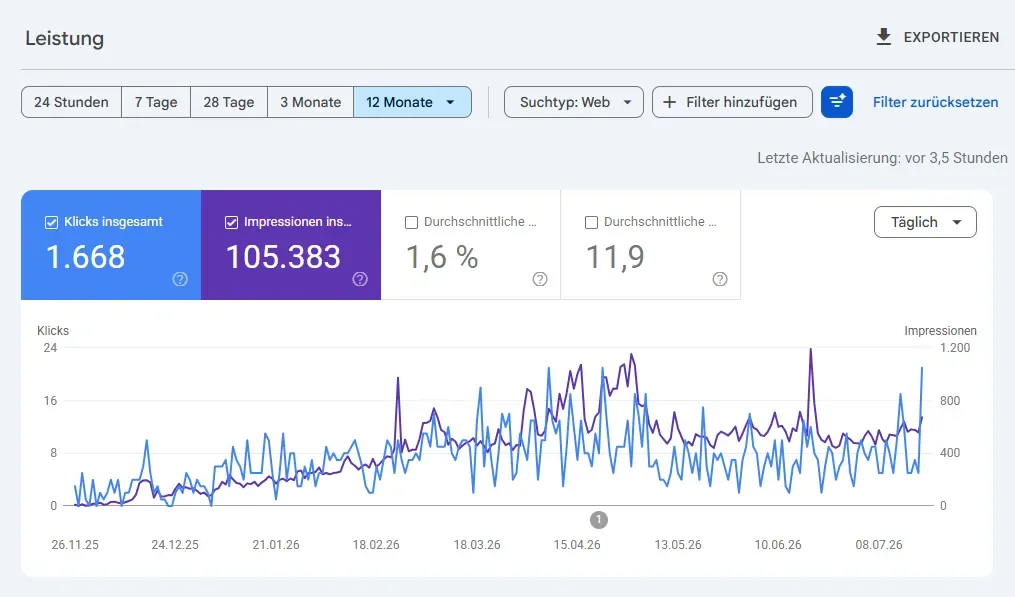
A 12-month Search Console view shows 1,668 clicks from 105,383 impressions, CTR at 1.6% and average position 11.9.
The screenshots are the store’s own reports, shown in their German interface.
What we would do next
We would use the revenue data to find the collections and products that already sell through organic search, and strengthen those first with better content and internal links. Then we would look for brand and product searches where the store appears but is not yet near the top, since those are the closest to turning into extra sales.
What this project taught us
In a premium beauty niche there is no single trick. The rankings were earned through fundamentals applied page by page: a tidy technical base, one target per collection, solid product pages and steady monthly effort.
The device data also stood out. Most sessions came from phones, so on any beauty store we now review the mobile product and collection experience early in the project.
Is this approach right for your store?
If you sell well-known brands and compete with bigger retailers, a focused collection and product strategy is usually the fastest path to revenue. See our Shopify SEO services or our eCommerce SEO agency page.
Evidence from the project
Screenshots from the client's own tools. Click to enlarge.